





FAQ's
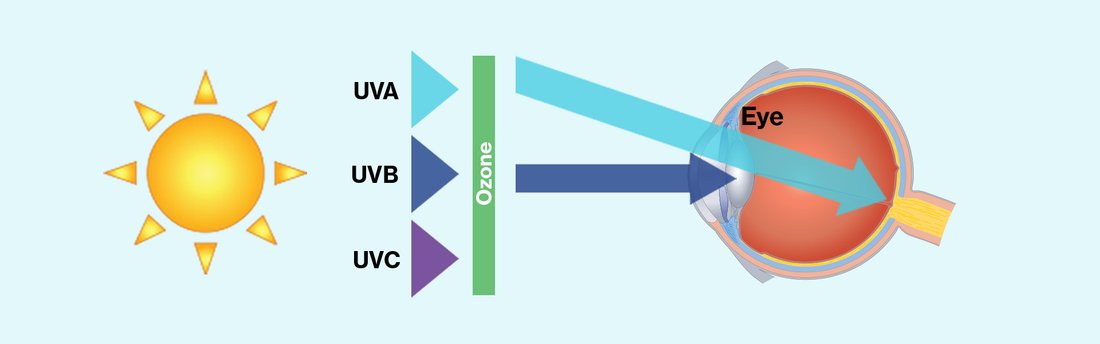
UV-A rays penetrate deeper into the eye and can contribute to long‑term issues like cataracts and macular degeneration, while UV-B rays affect the cornea and lens and can cause immediate issues such as photokeratitis (corneal sunburn).
Common UV‑related eye problems include cataracts, pterygium (surfer’s eye), photokeratitis, macular degeneration, and even skin cancer around the eyelids.
Yes. UV rays penetrate through clouds and can be reflected off surfaces like snow, water, sand, and buildings—meaning your eyes are still exposed even in shade or during winter months.
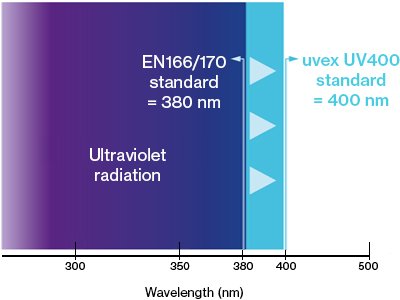
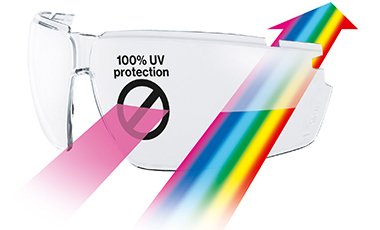
Choose glasses that block 100% of UVA and UVB rays (or are labelled UV400). Lens darkness doesn’t indicate UV protection, so always check the rating. Wraparound or larger frames offer better coverage by reducing light entering around the lenses.