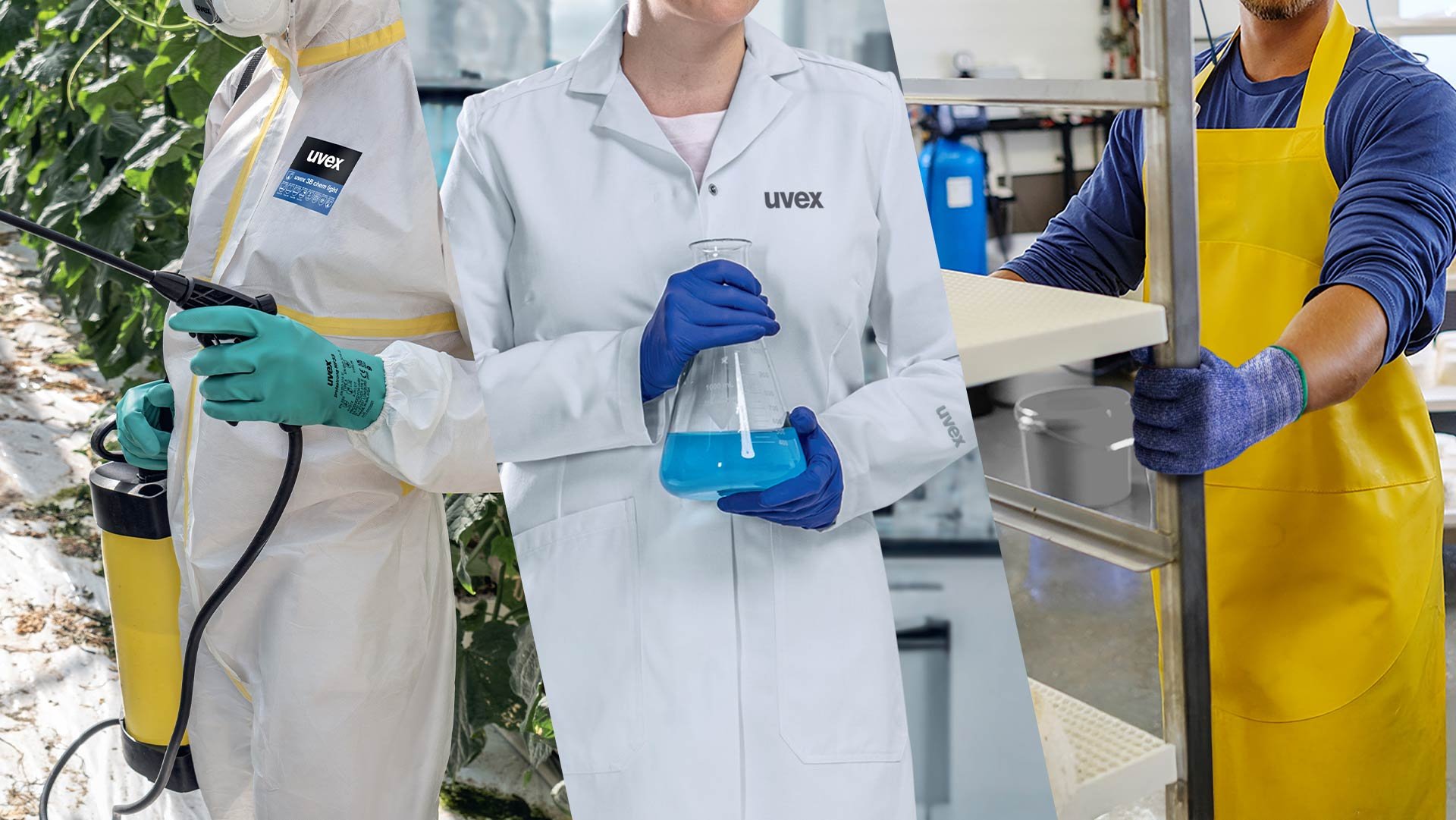
Food-safe hand protection for demanding working environments
Food industry workers often face a combination of hygiene requirements and practical workplace hazards. Gloves may need to support food-contact suitability while also helping to manage wet work, repeated handling, grip demands, abrasion, cuts or long periods of wear, depending on the task and environment.
Under the food contact materials framework, materials intended to come into contact with food should not transfer constituents in quantities that could endanger human health, bring about an unacceptable change in the composition of food, or negatively affect its taste, smell or other organoleptic properties. This is why choosing the right glove for each application matters.

How to choose the right food-safe glove
Choosing the right safety glove for food handling should always start with the task, the environment and the hazards involved. HSE advises employers to base glove selection on the substances handled, any additional hazards, the type and duration of contact, the wearer’s size and comfort, and the practical demands of the task itself.
Working environment

Different gloves may be better suited to different food types and working conditions. If your team works in damp, chilled or washdown-heavy areas, glove grip and performance in wet conditions are important considerations. HSE also notes that prolonged contact with water or “wet work” can create additional risks for the hands, so glove suitability should be assessed carefully.
Number of hazards

In many food production settings, workers may face more than one risk at a time. In addition to food-contact suitability, glove selection may need to account for cuts, abrasion, puncture risk, chemical exposure or waterproof protection, depending on the task. Some gloves may need to meet standards linked to chemical (EN 374) or wet-work resistance and some may also provide protection against mechanical hazards (EN 388).
Dexterity and comfort

Comfort matters, especially if gloves are worn for long periods. Glove fit and wearer comfort should be part of the selection process, because gloves that are too tight, too loose or uncomfortable can affect grip, dexterity and wearer acceptance. For lighter tasks and more precise handling, a glove with good flexibility may be the best choice. For higher-risk applications, a more protective glove may be needed, provided it still supports the user in carrying out the task safely and effectively.
Food handling applications for uvex safety gloves
uvex food standard approved gloves are suitable for a broad range of food industry environments where safe and hygienic hand protection is needed. Typical application areas may include:
- Food manufacturing and processing environments where safe product handling is essential.
- Wet or humid handling tasks where grip and wearer comfort are important.
- Dry food handling and packing applications requiring control and dexterity.
- Tasks where workers may need additional protection against mechanical risks such as cuts or abrasion.
- Mixed-use environments where hygiene, compliance and day-to-day productivity all matter.





Application areas for uvex safety gloves in the food industry:
The table below shows which uvex food standard approved gloves are suitable for different food groups and contact conditions. If you are unsure which model is right for your site, our team can help you assess the task, the environment and the level of protection required.
Aqueous pH > 4.5 | Acidic pH < 4.5 | Alcoholic | Fatty | Dry (non-fatty) | |
Non-alcoholic beverages Fruit Eggs Vegetables Crustaceans | Vinegar Yeast Milk Yoghurt | Wine Spirits Liqueurs | R1 = olive oil R2 = butter and margarine R3 = fish, cheese and baked goods R4 = meat and poultry R5 = sandwiches and deep-fried pastries | Bread Rice & pasta Tea Spices Pulses | |
| uvex Bamboo TwinFlex® D SG | Yes | Yes | Yes | Yes (R1 to R5) | Yes |
| uvex Bamboo TwinFlex® D XG | Yes | Yes | Yes | Yes (R1 to R5) | Yes |
| uvex Bamboo TwinFlex® F uXT1 | Yes | Yes | Yes | Yes (R1 to R5) | Yes |
| uvex Bamboo TwinFlex® F sleeve | Yes | Yes | Yes | Yes (R1 to R5) | Yes |
| uvex C500/uvex C500 sleeve | Yes | Yes | Yes | Yes (R1 to R5) | Yes |
| uvex phynomic D uXT1 | Yes | Yes | Yes | Yes (R1 to R5) | Yes |
| uvex athletic lite xt | Yes | Yes | Yes | Yes (R1 to R5) | Yes |
| uvex phynomic B foam | Yes | Yes | Yes | Yes (R1 to R5) | Yes |
| uvex phynomic C5 | Yes | Yes | Yes | Yes (R1 to R5) | Yes |
| uvex phynomic C XG ESD | Yes | Yes | Yes | Yes (R1 to R5) | Yes |
| uvex phynomic F XG | Yes | Yes | Yes | Yes (R1 to R5) | Yes |
| uvex phynomic foam | Yes | Yes | Yes | Yes (R5) | Yes |
| uvex phynomic lite | Yes | Yes | Yes | Yes (R1 to R5) | Yes |
| uvex profastrong NF33 | Yes | Yes | Yes | Yes (R2 to R5) | Yes |
| uvex rubiflex und uvex rubiflex S | Yes | Yes | Yes | Yes (R1 to R5) | Yes |
| uvex u-fit | Yes | Yes | Yes | Yes (R3 to R5) | Yes |
| uvex u-fit strong N2000 | Yes | No | Yes | Yes (R3 to R5) | Yes |
| uvex unilite thermo | Yes | Yes | Yes | No | Yes |
Food standard approved uvex glove options
Safety gloves must be specifically adapted to their respective applications. As glove performance requirements can vary significantly from one site to another, the best approach is to select a glove based on the food handled, the working environment, the hazards present and the wearer’s practical needs. To determine which safety glove is the right one for each application we support our customers as an active partner – and our versatile portfolio allows uvex to cover a huge range of application areas:
Mechanical protection (cut, abrasion & general handling)
Gloves designed primarily to protect against mechanical risks such as cuts, abrasions, tearing and impact, commonly used in food processing, prep, and handling tasks.
Cut protection (high / medium)
General handling & grip (light / medium mechanical risk)
Wet grip | Thermal + liquid / mechanical combination
Chemical & liquid protection
Gloves designed to provide resistance to liquids, oils, cleaning chemicals, and food processing substances, typically coated (nitrile, NBR, etc.).
Compliance, hygiene and peace of mind
Food-contact suitability is only one part of the decision-making process, but it is an important one. Food contact materials used in Great Britain must comply with the general framework set out in assimilated Regulation 1935/2004, and the Food Standards Agency explains that these materials must not harm health or negatively affect food composition or characteristics when used as intended. At the same time, glove selection should also support safe working practices for the people wearing them. HSE advises that glove choice should reflect the realities of the task, including contact type, duration of wear, grip needs, potential skin exposure and comfort.
Why partner with uvex?
Selecting the right safety gloves when working with food is essential. Whether you need support for food manufacturing, handling, wet work, fine tasks or more demanding environments, uvex can help you identify a glove that supports hygiene, wearer comfort and the protection needs of your team.

Need help choosing the right food-safe glove?
Choosing the right PPE can make all the difference when it comes to safety, comfort, and compliance. If you need help choosing the right glove for food handling, processing or packaging, get in touch with the uvex team to discuss your application, request advice or explore suitable options for your site. Simply fill in our quick contact form or email marketing@uvex.co.uk.
FAQ's
A glove suitable for food handling must be appropriate for its intended use and should not transfer harmful substances to food, cause an unacceptable change in food composition or negatively affect food characteristics under normal conditions of use.
Not always. The current uvex page shows that suitability can vary depending on whether the food environment is aqueous, acidic, alcoholic, fatty or dry, which is why checking application compatibility is important.
No. HSE advises that glove selection should also take account of other workplace hazards such as wet work, chemical exposure, cuts, abrasion, puncture risk, fit, comfort and the duration of wear.
Comfort and fit affect how well gloves are worn and used in practice. HSE notes that gloves that are too tight, too loose or uncomfortable can affect grip, dexterity and wearer acceptance, particularly during longer periods of wear.
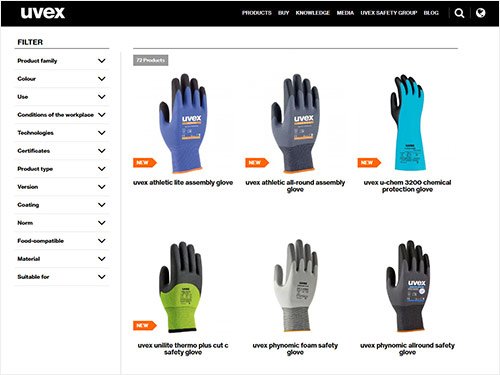
Explore our safety glove range
Find your nearest uvex distributor
PPE for the food industry