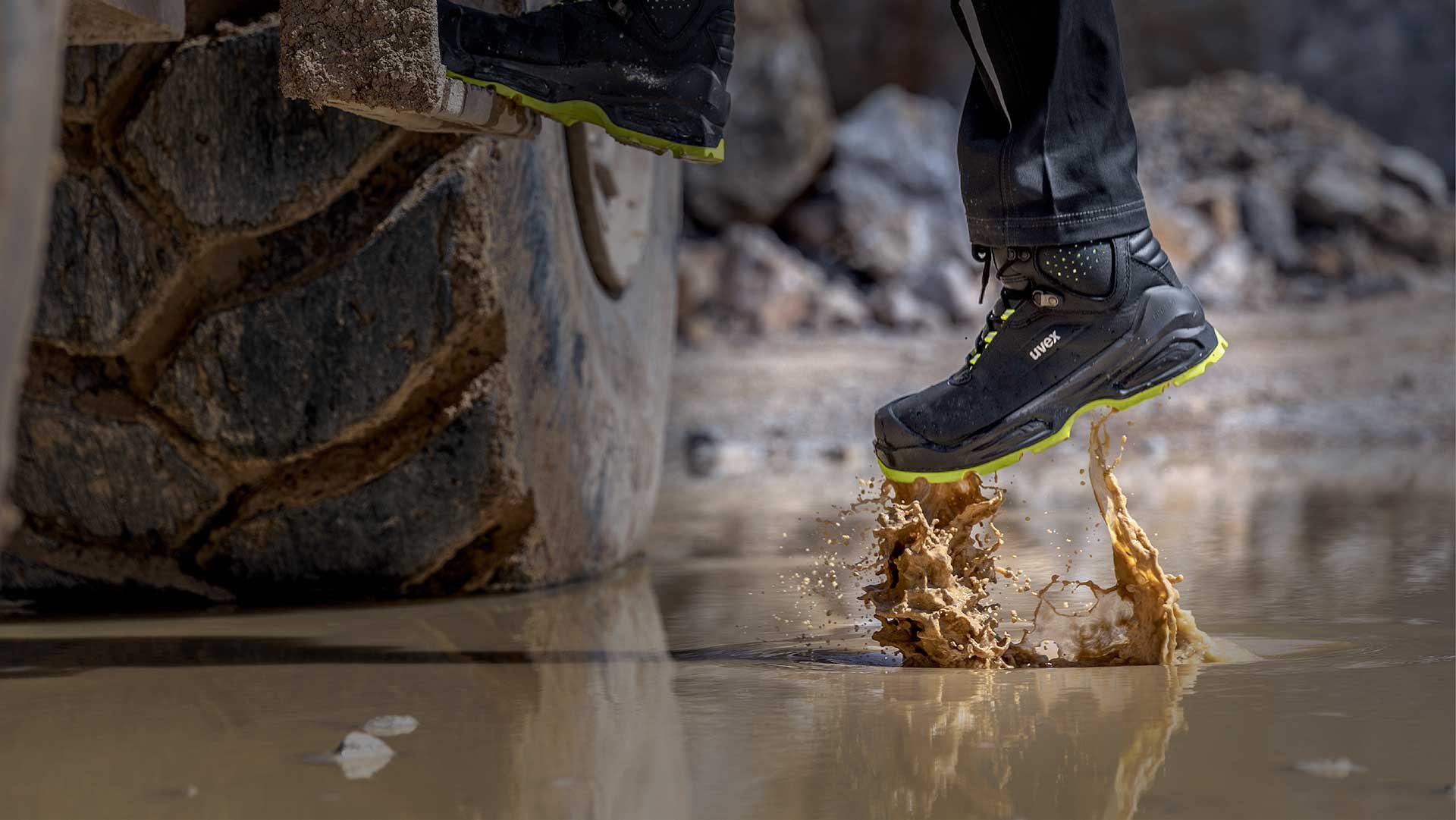
How EN ISO 20345:2022 has changed water resistance
Under the previous EN ISO 20345:2011 standard, footwear was often marked with WRU (Water-Resistant Upper). However, this only tested the upper material, not the complete shoe construction. The updated EN ISO 20345:2022 standard introduces a more practical, real-world approach:
- WPA (Water Penetration and Absorption) replaces WRU
- WR (Water Resistance) now applies to the entire shoe
This means footwear is no longer assessed in isolation, but as a complete system - including seams, joins, and construction - giving a far more accurate indication of performance in wet conditions.

Waterproof safety footwear
Waterproof footwear is classified under WR and offers a significantly higher level of protection. To achieve a WR rating under EN ISO 20345:2022, the entire shoe must prevent water ingress during testing.
This ensures reliable performance where exposure to water is frequent or unavoidable.
Key characteristics:
- Fully sealed construction
- Designed to keep feet dry in sustained wet conditions
- Tested as a complete system - not just materials
Typical applications:



Advantages of waterproof footwear: |
|
Safety footwear with Gore-Tex lining
Water-resistant safety footwear
Water-resistant footwear - now classified under WPA - is designed to limit water penetration into the upper material.
However, water-resistant footwear is not fully watertight. Moisture can still enter through seams, stitching, or prolonged exposure to water.
Key characteristics:
- Resists light splashes and intermittent exposure
- Slows down water absorption
- Suitable for dry environments with occasional wet conditions
Typical applications:



Advantages of water-resistant footwear: |
|
Safety footwear with uvex waterstop technology
New waterproof safety classes: S6 and S7
EN ISO 20345:2022 also introduces new safety footwear categories:
- S6 – similar to S2, but with full waterproof (WR) protection
- S7 – similar to S3, but with full waterproof (WR) protection
These classifications make it easier to identify footwear that combines certified safety features with guaranteed waterproof performance.
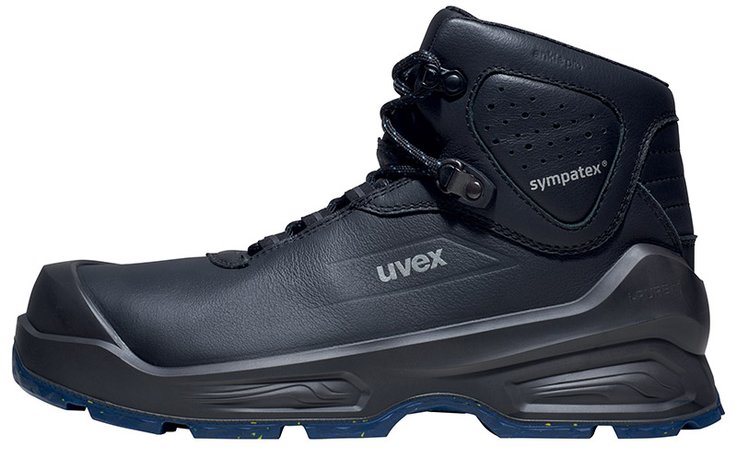
Why the new standard matters
The move from WRU to WPA and WR is more than just a label change - it reflects a shift towards real-world performance testing. Key benefits:
- ✅ More accurate representation of water protection
- ✅ Reduced risk of water ingress through weak points
- ✅ Clearer guidance for PPE selection
By testing the entire shoe rather than just components, EN ISO 20345:2022 helps safety professionals make more informed decisions.
Understanding the difference between water-resistant and waterproof safety footwear is essential for both comfort and protection. Thanks to EN ISO 20345:2022, the distinction is now clearer than ever. With updated classifications like WPA and WR, and new categories such as S6 and S7, selecting the right footwear is simpler - and more reliable. By matching your footwear to your working conditions, you can ensure optimal performance, compliance, and wearer wellbeing.
Looking for further guidance?
Choosing the right PPE can make all the difference when it comes to safety, comfort, and compliance. If you’d like tailored advice or want to trial uvex products in your environment, get in touch via our quick contact form or email marketing@uvex.co.uk.
FAQ's
WPA stands for Water Penetration and Absorption, indicating that the upper material resists water but is not fully waterproof.
WR means Water Resistance and confirms that the entire shoe is waterproof, preventing water from entering during testing.
Not typically. WPA-rated footwear is best for light or occasional exposure—extended wet conditions require WR-rated waterproof footwear.
WRU has been replaced by WPA, providing a more accurate assessment of water resistance.
They are new classifications under EN ISO 20345:2022 that indicate footwear with full waterproof (WR) protection, alongside standard safety features