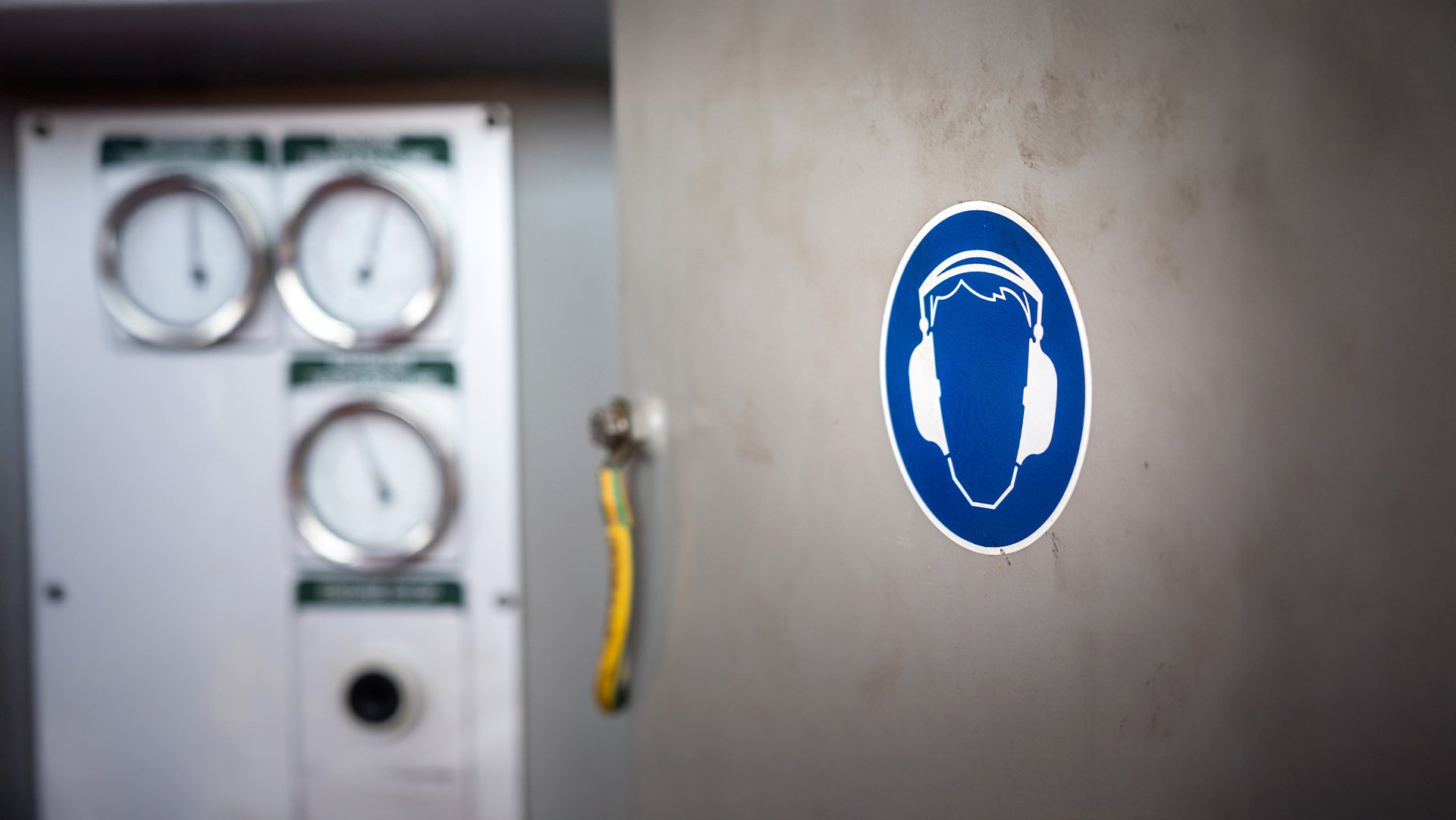
Why overprotection is now a compliance risk
In 2025, the HSE reported a 300% increase in noise-related enforcement notices, with fines exceeding £11 million in April alone. Overprotection, where earplugs and/or earmuffs reduce sound below safe level, is a real issue. Recent HSE inspections revealed serious gaps in workplace noise management:
75%
of employees didn’t know how to check or report damaged PPE.
63%
weren’t told to wear hearing protection continuously during exposure.
80%
received no fit or compatibility training.
95%
of employers hadn’t verified whether workers could still hear critical warnings like fire alarms or reversing signals.
These findings point to widespread non-compliance with the Control of Noise at Work Regulations 2005, which require employers to protect workers from hazardous noise exposure.
Why overprotection matters just as much as under-protection
While hearing loss prevention remains critical, providing products with excessive attenuation values that result in reducing noise to an unsafe level, is now a compliance risk.
Workers who can’t hear alarms or communicate effectively are more likely to be injured, and employers are being held accountable.
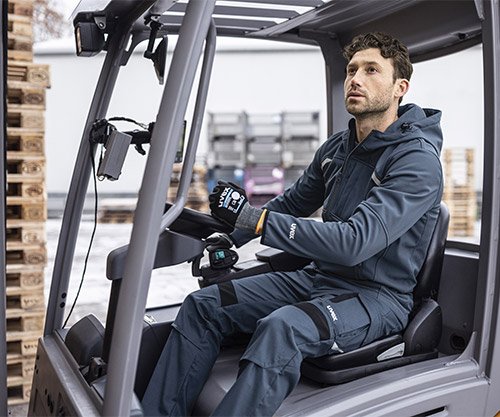
Balancing protection and awareness
The HSE’s CUFF framework, Condition, Use, Fit the ear, Fit for purpose, provides a clear structure for ensuring hearing protection is correctly selected, worn, and maintained.
CONDITION
Regular inspection and maintenance. uvex encourages routine checks and early replacement of hearing protection to ensure continued protection and compliance.
USE
Promoting consistent and confident use. uvex prioritises wearability through ergonomic designs, lightweight materials, and compatibility with other PPE. Educational materials and toolbox talks reinforce correct usage.
FIT the ear
Training and verification. uvex offers on-site Fit Clinics to train employees on achieving a proper fit and seal, including compatibility with other PPE.
FIT for purpose
Matching protection to real noise levels. uvex educates employers on assessing workplace noise to choose appropriate hearing protection, focusing on accurate attenuation to prevent both under-protection and overprotection.
Clair Weston
Head of Marketing at uvex
The objective is not to eliminate noise entirely, but to ensure safety. It is imperative to safeguard hearing without diminishing situational awareness. The CUFF approach reflects how uvex already operates, focusing on education, fit and real-world usability. By supporting employers with training, inspections, and high-performance PPE, we ensure hearing protection is not just provided, but properly worn and maintained.

To support this approach, the uvex xact-fit system is designed to help wearers understand exactly how much protection they're receiving from their hearing protectors, regardless of brand or model.
The uvex solution
To help employers align with CUFF, uvex offers hearing protection designed to avoid overprotection, with a focus on balancing safety and awareness. Featuring Real Active Listening (RAL) technology, the uvex aXess one is an intelligent earmuff allowing wearers to stay protected while remaining fully aware of their surroundings.

Smart sound management
Reduces harmful noise to safe levels, while amplifying speech and ambient sound.

Clear communication
Enables speech at close range and detection of warning signals.

Prevents over-insulation
Ensures sound levels stay within a safe range, above the HSE’s critical awareness threshold.

Comfort and connectivity
Available in both over-the-head and helmet-mounted versions, where the coiled cable fits with helmets; Bluetooth 5.2 enables hands-free calls.
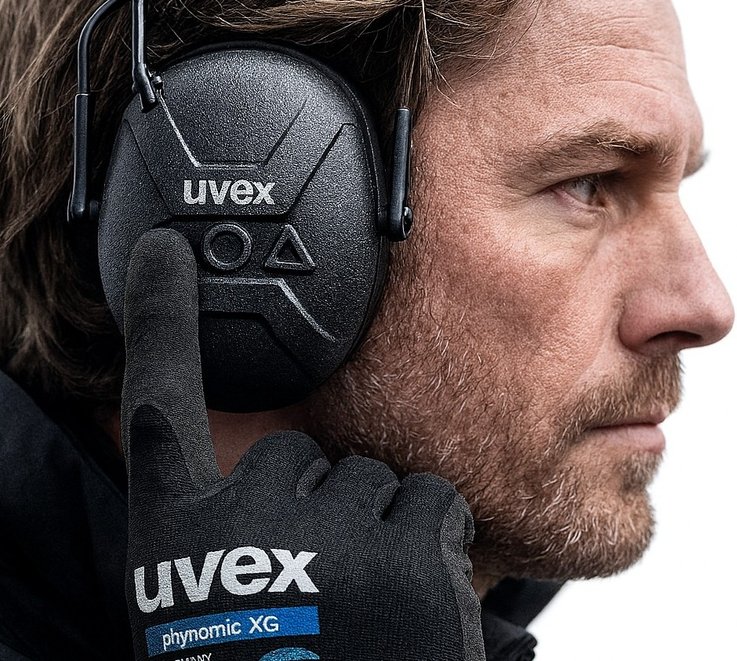
- Endurance: 50-hour battery life, USB-C charging, and glove-friendly controls. Unlike traditional earmuffs that block everything, RAL uses surround microphones to transmit ambient noise at a reduced volume. This means workers can hear alarms, machinery, and colleagues without compromising their hearing protection.
- Built for real-world workplaces: Multiple-purpose functionality as can be used as passive ear defenders by disabling the RAL function. With RAL deactivated the uvex aXess one provides SNR of 31 dB. With RAL activated, the uvex aXess one reduces harmful noise to safe levels.
- Bluetooth® 5.2 with dual-device pairing for hands-free calls and optional audio streaming to help with mundane repetitive tasks IP54-rated for dust and moisture resistance.
- Memory foam cushions and padded headband for all-day comfort.
- USB-C fast charging with up to 50 hours of battery life.
- Intuitive controls designed for gloved hands.
- LED status indicators and voice prompts for easy operation.
Whether you're in logistics, construction, aerospace and defence, utilities or the food sector, uvex aXess one helps your team stay connected, compliant, and ultimately, safe. “Too often, overprotection isolates workers and leads to non-compliance,” added Clair Weston. “In line with HSE’s CUFF principles, the uvex aXess one helps teams stay connected, aware, and protected.”
Whether you're in logistics, construction, aerospace, or utilities, uvex aXess one helps your team stay connected, compliant, and safe.
Stay protected, not isolated
Overprotection is now a leading compliance issue in hearing safety, but it’s entirely avoidable. By adopting smart technology like the uvex aXess one, and matching your protection needs to actual noise levels, training workers on correct fit and use, as well as cleaning and maintenance, you can prevent overprotection and ensure your workforce remains both safe and aware. The CUFF system is your guide to best practice; helping you protect hearing without compromising communication or compliance.
Ready to review your hearing protection programme? Contact the uvex team for expert advice and discover how the right approach can keep your business compliant, your workers connected, and everyone safer.

Looking for further guidance?
Choosing the right PPE can make all the difference when it comes to safety, comfort, and compliance. If you’d like tailored advice or want to trial uvex products in your environment, get in touch via our quick contact form or email marketing@uvex.co.uk.
FAQ's
Yes, overprotecting employees can sometimes introduce unintended risks. For example, using PPE that is too restrictive, overly heavy, or unsuitable for the task can reduce mobility, impair visibility, or cause discomfort. This may lead to reduced compliance or increased likelihood of errors, highlighting the importance of selecting the right level of protection for the specific hazard.
The correct level of PPE should always be based on a thorough risk assessment. This involves identifying hazards, evaluating the level of exposure, and selecting PPE that provides adequate protection without compromising comfort or usability. Striking the right balance helps ensure both safety and wearer acceptance.
Yes, if PPE is uncomfortable, poorly fitting, or overly restrictive, workers may be less likely to wear it correctly or consistently. This can reduce its effectiveness and increase risk. Comfortable, well-designed PPE that fits properly encourages better compliance and safer working practices.
Not necessarily. While adequate protection is essential, more is not always better. Over-specifying PPE can impact performance, productivity, and comfort. The goal is to provide appropriate, task-specific protection that supports both safety and efficiency, rather than applying a one-size-fits-all or overly cautious approach.