

PPE solutions for veterinary professionals
Protecting workers in equine practice
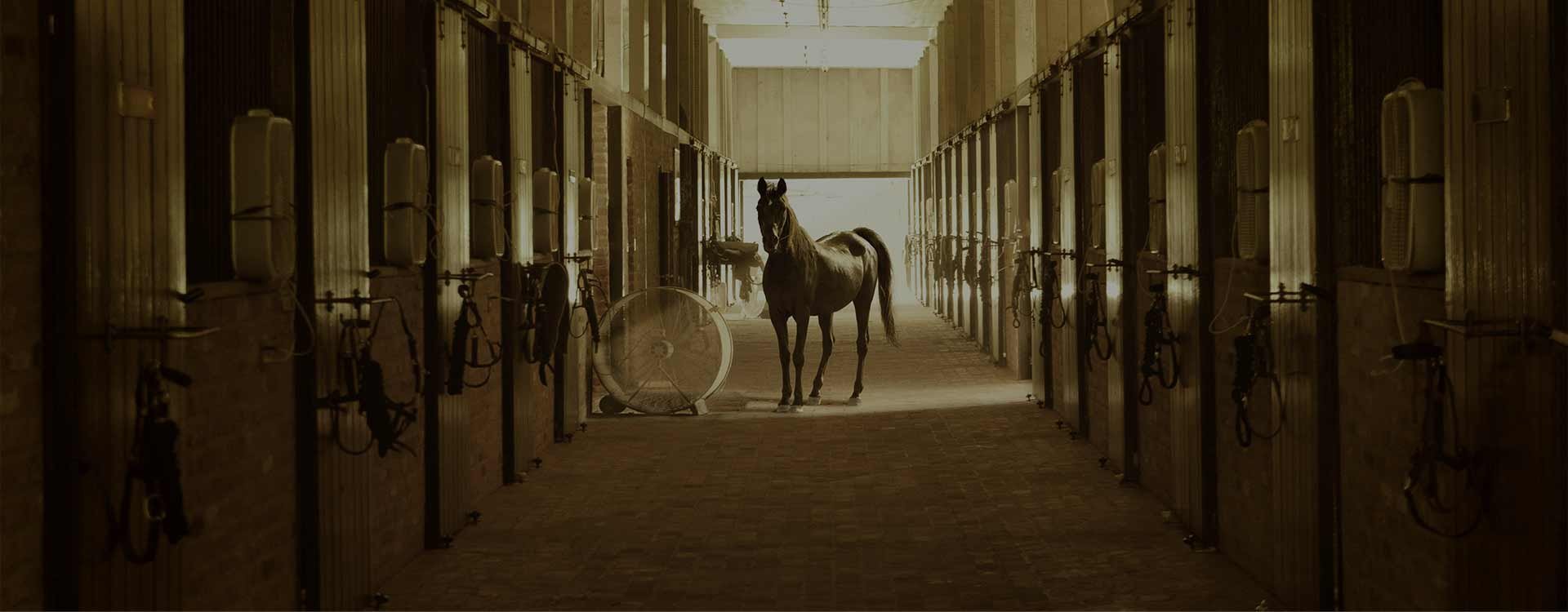
Equine practice is undeniably rewarding, but it comes with risks that are often underestimated. Whether in the yard, examination area, or stable, equine professionals routinely work in proximity to large, unpredictable animals and hard surfaces, bodily fluids, chemicals and sharps.
While training, animal handling expertise and safe working procedures help reduce the likelihood of serious incidents, equine veterinary professionals continue to work in unpredictable environments where a sudden movement can have significant consequences. Alongside the risk of impact injuries, staff are routinely exposed to bodily fluids, medicines, disinfectants and other chemicals, often while treating distressed or moving animals.
The use of sharps, syringes, scalpels and other clinical instruments further increases the potential for injury and contamination, making appropriate PPE an essential part of everyday practice.
Head-to-toe protection
Hard hats are a central focus because a kick, sudden movement, fall or collision with a wall or concrete floor can have life-changing consequences. But equine veterinary work exposes more than the head:




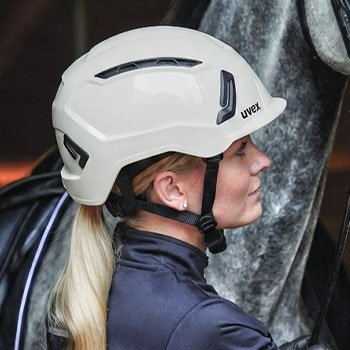
Head protection: A suitable helmet can reduce the severity of injury from a blow or from striking the ground or another hard surface. The relevant standard, coverage, retention, fit, compatibility and comfort all matter.
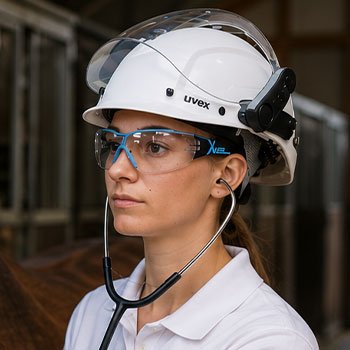
Eye protection: Safety spectacles and goggles can protect against bodily-fluid splash, chemicals and flying debris. Tinted lens options may also help reduce glare and support visual comfort around bright operating lights or mobile floodlights, provided the tint is suitable for the task and lighting conditions.
Protective gloves: Different tasks require different gloves. Examination gloves support hygiene and protection from biological contamination; chemical-protective gloves must be selected for the substance, concentration and contact time; and specialist puncture-resistant products may help reduce some sharps risks.
Safety footwear: Slip-resistant footwear can support safer movement on smooth concrete, wet yard surfaces and hard hospital floors. Where the risk assessment identifies impact or compression hazards, protective toecaps can help protect against dropped equipment and being trodden on.
94.3%
of equine clinical staff surveyed had sustained a work-related injury during their career.
83.3%
of equine vets’ injuries were caused by an animal.
22%
of their most severe injuries involved the head.
Head protection
Different helmet standards are designed to address different hazards. Riding helmets are primarily developed around falls, industrial helmets focus on falling objects, and mountaineering helmets are designed for multi-directional impacts. However, there is currently no helmet standard written specifically for equine veterinary work, where risks may include kicks, slips, hard-surface impacts, confined spaces and unpredictable working positions.
Selecting suitable head protection should therefore be based on a thorough risk assessment, considering likely impact directions, helmet retention, comfort, field of vision, ventilation, compatibility with other PPE and whether the helmet can be worn consistently throughout the task.
Why this matters for equine vets
PAS 015 and EN 1384 riding helmets provide protection for mounted riding activities, while EN 397 industrial helmets are primarily designed to protect against falling objects. Equine veterinary work often involves a wider range of hazards, including lateral and rear impacts, close-contact handling and hard-surface falls.
EN 12492 helmets are designed to protect against multi-directional impacts, with coverage for the top, front, rear and sides of the head, and a secure chinstrap retention system to help keep the helmet in place during sudden movement. This makes them a relevant option where risk assessments identify these types of hazards.
Specifying EN 12492 helmets as part of a PPE programme can help bridge the gap between traditional riding helmets and the practical demands of equine veterinary work. Wearer acceptance should also be considered, with options such as helmet silks, practice branding and compatible accessories helping to improve comfort, appearance and usability.
EN 12492 helmets are tested for impact on the:

Understanding helmet standards
Choosing the right helmet means understanding the safety standards, markings, and performance requirements that apply to different industries and tasks.
Discover WEARABILITY
Poorly fitted safety helmets are not only uncomfortable, but they also won’t offer the right level of protection. The suspension harness should act like a shock absorber and allow a level of airflow.
Mips® technology
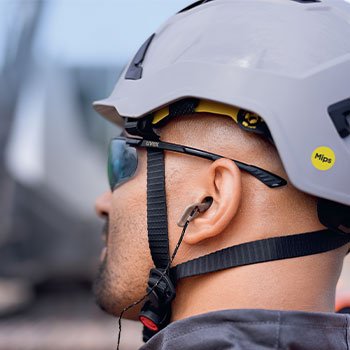
Mips is a Multi-directional Impact Protection System An additional low-friction layer developed to absorb rotational energy, reducing the force transferred to the wearer's head.
Safety eyewear
Protecting eyes and vision
Bodily fluids, chemicals, debris and intense light can all affect the eyes.
- Safety spectacles: Suitable for lower-energy debris and low splash risks where the risk assessment does not require a sealed design. Side protection and secure fit should be considered.
- Safety goggles: Provides impact protection from projectiles as as well protection from liquid splash and droplets. anti-mist coatings and indirect ventilation helps prevent misting which could obscure vision.
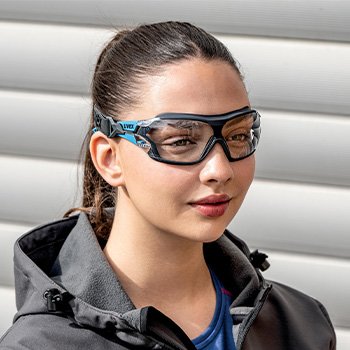
Choose by hazard
Spectacles and goggles are not automatically interchangeable, and a tinted lens should never make a low-light task harder to see.
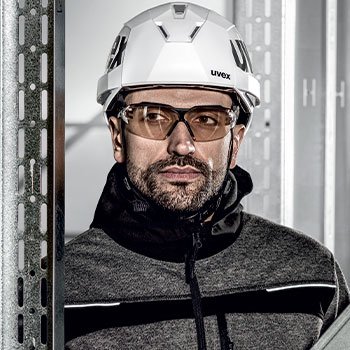
Tinted lenses
Tint can support visual comfort and contrast in bright conditions. uvex CBR65 is intended to reduce distracting blue light and glare while supporting contrast perception.
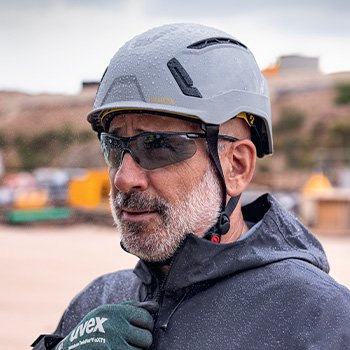
Compatibility
Eye protection must work with the helmet, respirator or face protection being worn. Gaps, pressure points and fogging can undermine protection and WEARABILITY.
Hand protection
Match the glove to the task
There is no single “equine veterinary glove”. The correct choice depends on whether the priority is hygiene, chemical resistance, grip, dexterity, mechanical protection or support against sharps exposure.
Grip and handling: A textured or task-specific working glove may support grip when handling equipment or working in damp environments, but it must preserve the sensitivity and dexterity the procedure requires.
Needlestick and sharps risk: Puncture-resistant materials may help in selected tasks but cannot guarantee protection from a hypodermic needle. Prevention should prioritise safer sharps, stable restraint, good positioning, keeping hands out of the line of fire and immediate disposal into an approved sharps container.
Chemical protection: Check the product’s chemical-resistance data against the exact substance, concentration, temperature and likely contact time. Thin examination gloves should not be assumed to protect against every disinfectant, medicine or cleaning chemical.
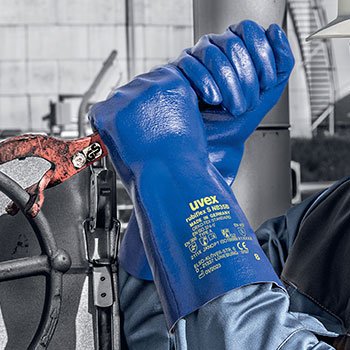
Chemical glove expert system
Our extensive online chemical database and advisors are here to help 24/7, providing all the information you need to select suitable safety gloves for handling hazardous substances.
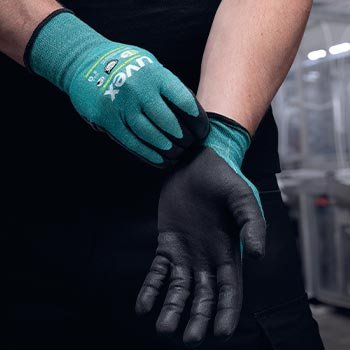
Safety gloves that fit like a second skin
While it is important to choose the correct safety gloves for your specific task and work environment, it is equally important to ensure your safety gloves fit properly.
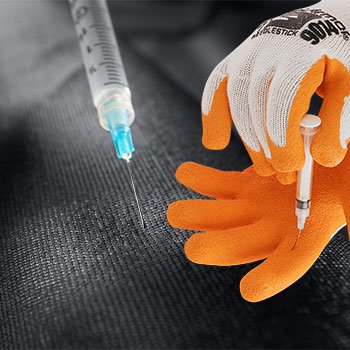
Cutting-edge technologies
Engineered for high-risk environments, these innovative solutions combine durability, comfort and performance to keep your hands safe without compromising dexterity.
Foot protection
Safer footing around horses
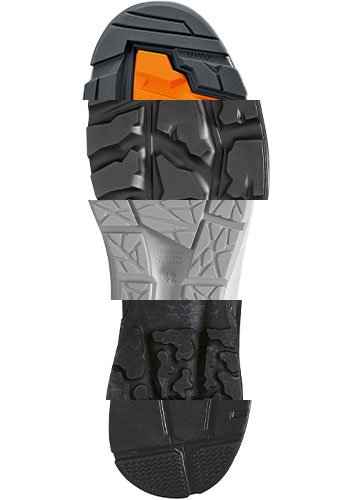
Equine veterinary personnel move between very different surfaces, including smooth hospital floors, wet concrete, yards, stable bedding, mud and uneven ground. One outsole may not perform equally well in every condition. What to consider:
- The main walking surfaces and likely contaminants, including water, bodily fluids, mud, disinfectants andbedding
- A tread pattern and compound suited to the environment, with trials carried out on representative surfaces
- Protective toecaps where there is a foreseeable risk from hooves, compression or dropped equipment
- Support, fit, heel security and comfort over long clinical shifts
- Cleanability, contamination control and timely replacement as tread wears
- Whether a different footwear option is needed for indoor hospital work and outdoor yard visits
HSE guidance stresses that “slip-resistant” is not a universal performance claim. Footwear should be selected for the surfaces and contaminants present, trialled with wearers and checked as it wears. Toe protection and slip resistance are separate features, so both should be specified when both hazards exist.
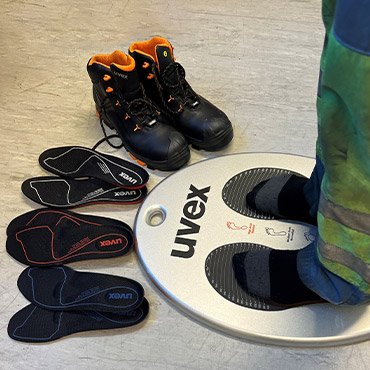
uvex footwear fit clinics
The uvex footwear fit clinics support employees with the correct fitting of safety footwear and ensures employees find the correct size (length) and width for their boots or shoes.
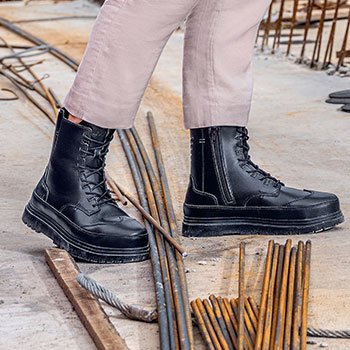
Discover WEARABILITY
Properly-fitting footwear can make a significant difference to comfort, concentration levels and the avoidance of accidents. We understand that the design and quality of materials also have a bearing on wearer experience.
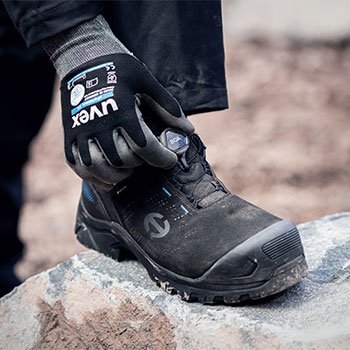
Safety footwear technologies
With advanced materials including recycled PET uppers and abrasion-resistant TPU outsoles, uvex shoes offer breathable, water-resistant protection that supports every step, safely and sustainably.
Sound interesting?
Request a trial programme or contact one of our uvex solutions specialists for more information about our products and services.
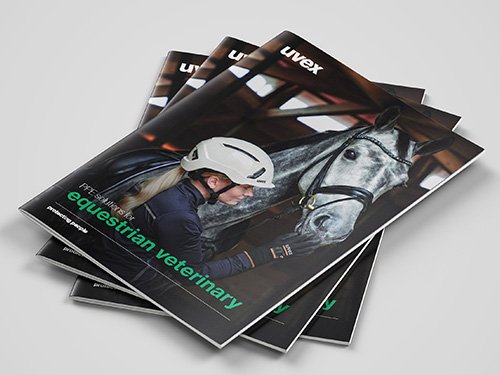
Download the brochure (PDF)
Start a product trial today
Find your nearest distributor