
Footwear ailments and conditions are often overlooked during selection
Not all footwear issues come down to size alone. In many workplaces, discomfort is linked to individual foot conditions and sensitivities that standard footwear selection does not always account for.
Employees may experience issues such as bunions, pressure across the forefoot, or discomfort caused by heat and moisture build-up inside the shoe.
Footwear that is too narrow can increase pressure on sensitive areas, while poor breathability can create conditions where problems such as athlete’s foot are more likely to occur or persist.
These challenges often become more noticeable over long shifts, where prolonged standing or walking places repeated strain on the same areas of the foot. If these factors are not identified, simply changing footwear models is unlikely to solve the problem.
Understanding how footwear interacts with different foot shapes and conditions allows for more appropriate selection. Whether that involves improving fit, allowing space where needed or choosing more breathable designs. A structured fit clinic helps bring these factors into focus, ensuring footwear is selected with the individual wearer and the workplace conditions in mind.

Poor WEARABILITY leads directly to non-compliance
When footwear lacks WEARABILITY, problems begin to emerge. Workers may adjust their footwear during the day, add non-certified insoles*, loosen laces to relieve pressure or become reluctant to wear their designated footwear for long periods. In some cases, footwear is removed or avoided where possible, particularly during lower-risk tasks.
These behaviours are typically driven by discomfort rather than attitude. Poor fit, limited breathability, excessive weight or insufficient support can all make footwear feel restrictive or distracting.
This is where WEARABILITY becomes critical. When footwear works with the body to support natural movement, maintain comfort and reducing fatigue, it becomes part of the working day rather than a barrier to it. When it does not, compliance becomes difficult to sustain.
Understanding how footwear performs in real use is often the difference between PPE that is issued and PPE that is consistently worn. A structured fit clinic helps identify these issues early, before they affect compliance across the workforce.
*It is important to note that only insoles that are officially certified for use with that model of safety footwear should be worn inside the boot or shoe. These insoles have been tested as part of a complete unit - meaning the footwear and insole combination has undergone rigorous assessment to ensure compliance with relevant safety standards, such as EN ISO 20345. This integrated testing guarantees that the protective features of the footwear, including antistatic performance, perforation resistance, and energy absorption, remain fully effective when used with the certified insole.

“I know my size” – why footwear selection often misses the real issue
A common assumption in safety footwear selection is that size determines fit. In practice, this is rarely the case. Discomfort is often caused by differences in width, internal volume or overall shape rather than length alone. Two employees with the same shoe size can have very different experiences depending on how the footwear accommodates their foot.
When this is not recognised, footwear may be returned or replaced multiple times without resolving the underlying issue. This leads to repeated trial and error, adding complexity for both the wearer and the organisation.
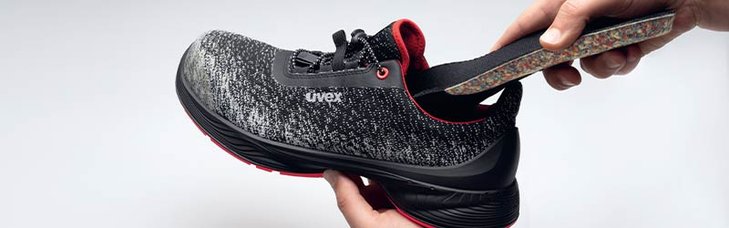
Many uvex footwear models address this through width-specific insole options, allowing internal fit to be adjusted without changing the footwear itself. This creates a more consistent and controlled way to accommodate different foot shapes with the same foot size across a workforce. Without this level of understanding, organisations can end up managing repeated issues rather than solving the root cause of poor fit.

Incorrect fit can affect movement, not just comfort
Footwear plays a fundamental role in supporting how the body moves. When it does not fit correctly, this support is reduced.
For example, if footwear is the wrong size, the arch support may not align with the wearer’s foot. This can affect how weight is distributed and how the foot functions during walking or standing. Over time, this may contribute to fatigue or discomfort that extends beyond the foot itself.
During long shifts, even small inefficiencies in movement are repeated thousands of times. This makes fit an important factor not only for comfort, but for maintaining consistent movement and reducing unnecessary strain. Ensuring footwear supports the foot correctly helps maintain stability, comfort and overall wearability throughout the working day.

Footwear issues can become visible through cost and administration
In some organisations, footwear issues are first recognised through operational pressure rather than direct wearer feedback. Ordering becomes more complicated as multiple sizes are requested. Returns and exchanges increase administrative workload, while stockholding often expands to accommodate uncertainty around fit, leading to a growing number of SKUs.
Individually, these issues may seem minor, but together they create inefficiencies that affect time, cost and consistency. For procurement teams, this often results in reactive decision-making. Instead of following a clear, repeatable process, footwear selection becomes a cycle of adjustments once problems arise. Addressing fit earlier helps reduce complexity and creates a more stable, predictable footwear programme.
Lower-cost footwear may seem like an immediate saving, but it does not always offer the same cushioning technologies, lightweight materials or fit options designed to support comfort over long shifts. Heavier, less supportive or less breathable footwear is more likely to contribute to fatigue and wearability issues. In many cases, a fit clinic and better-quality footwear chosen from the outset can reduce returns, improve compliance and lower overall programme costs.
What happens during a uvex footwear fit clinic?
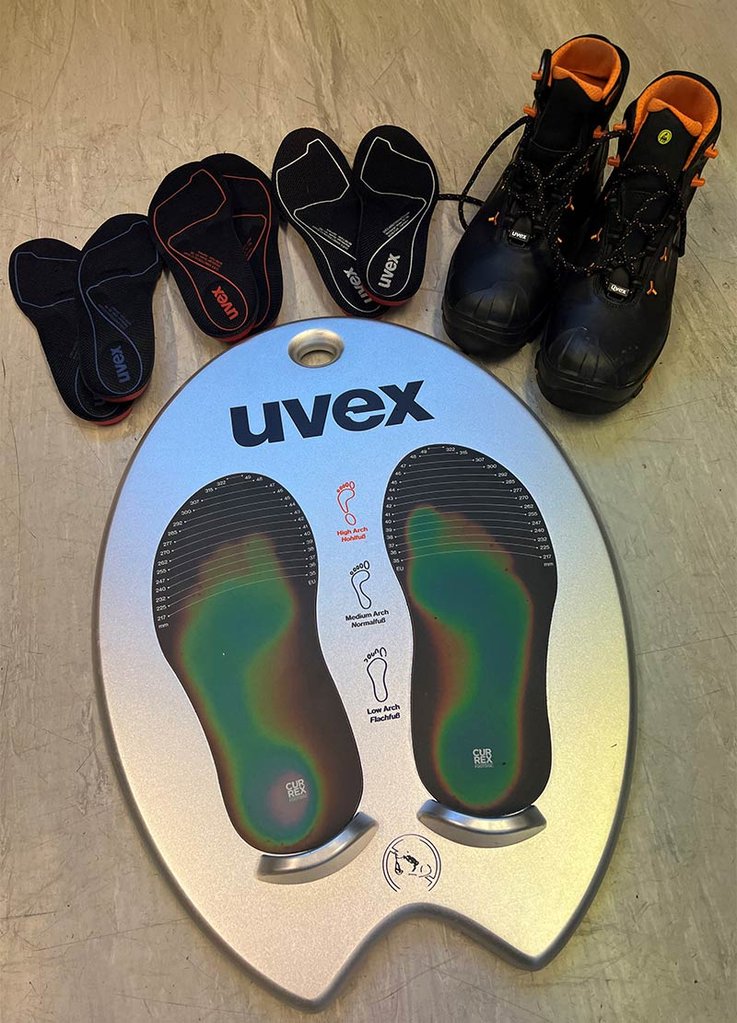
A uvex footwear fit clinic provides structured, on-site insight into how footwear fits real wearers and performs in everyday use.
Clinics typically involve:
- Assessing foot length, width, and shape
- Identifying recurring comfort concerns
- Identifying underlying health conditions
- Highlighting potential fit-related risks
- Providing guidance on suitable footwear models
- Recommending appropriate insole options
This is supported by practical fitting advice based on real working conditions and the demands of the role.
By linking footwear selection to actual wearer needs and workplace risks, organisations can move away from assumption-based decisions and towards a more consistent, informed and risk-aware approach.
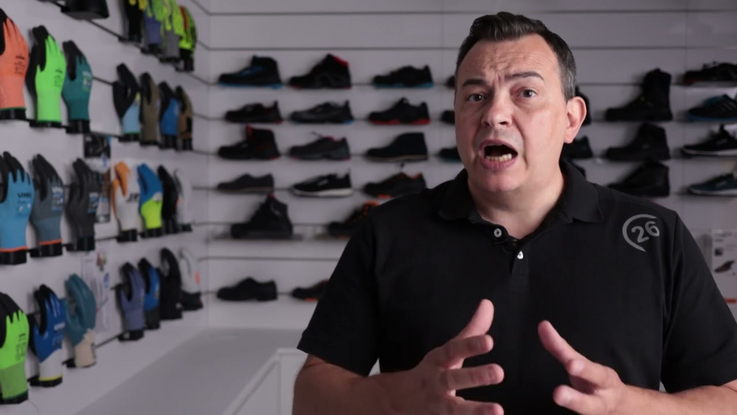
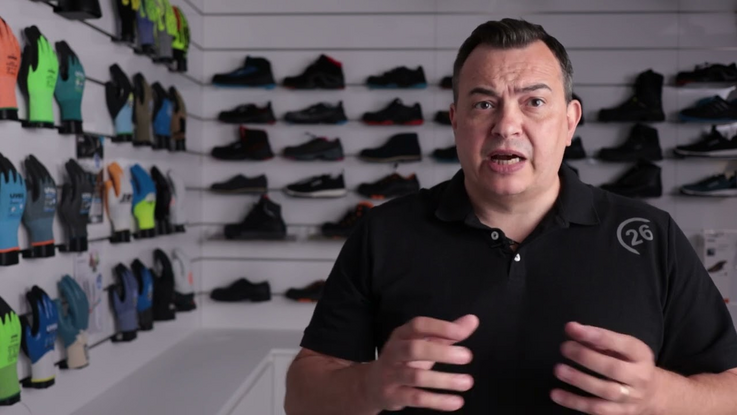
Our short video explains how we conduct a safety footwear fit clinic at uvex.
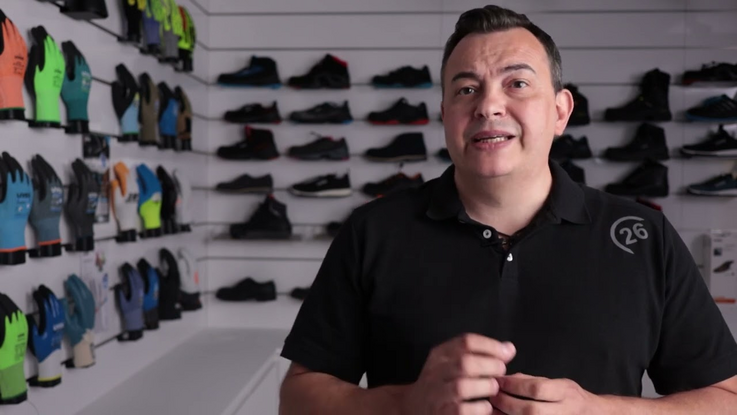
Watch more videos on our YouTube Channel youtube.com/@uvexUKKnowledgeHub
• Plantar fasciitis •
• Walking gait •
More information
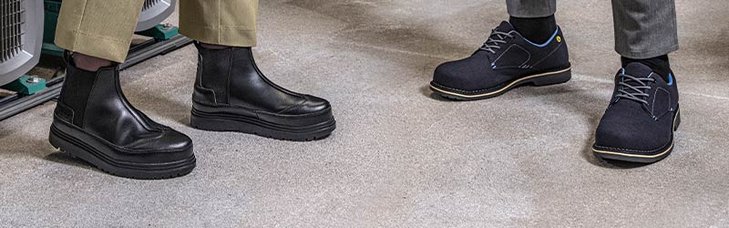
Looking to reduce footwear issues, improve compliance and gain confidence in your safety footwear programme? Book a uvex footwear fit clinic.
Book a uvex footwear fit clinic
Explore uvex insole options
Looking for further guidance?
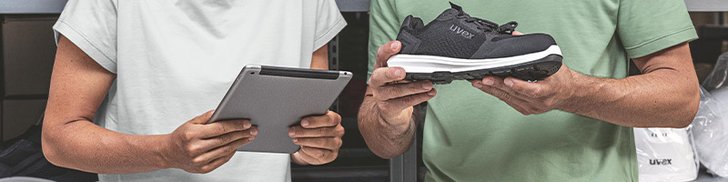
Choosing the right PPE can make all the difference when it comes to safety, comfort, and compliance. If you’d like tailored advice or want to trial uvex products in your environment, get in touch via our quick contact form or email marketing@uvex.co.uk.
FAQ's
Not necessarily. Shoe size does not account for differences in foot width, shape or arch support. Two individuals with the same size can experience very different levels of comfort. A footwear fit clinic helps identify these differences and improve fit accuracy.
Poorly fitted footwear can cause discomfort, leading to adjustments, inconsistent wear or reluctance to use PPE. When footwear fits correctly and feels comfortable, it is more likely to be worn consistently throughout the working day.
Yes. Poorly fitting footwear can affect weight distribution and alter natural movement. Over time, this may contribute to fatigue or discomfort in the legs, knees and lower back, particularly during long shifts. Musculoskeletal problems are often linked to repetitive or heavy lifting, bending, twisting and prolonged walking on hard surfaces, particularly where footwear provides limited cushioning or support.
Width-specific insoles allow the internal fit of footwear to be adjusted without changing the overall size of the shoe or boot. This can improve comfort, support and consistency across a workforce with different foot shapes.